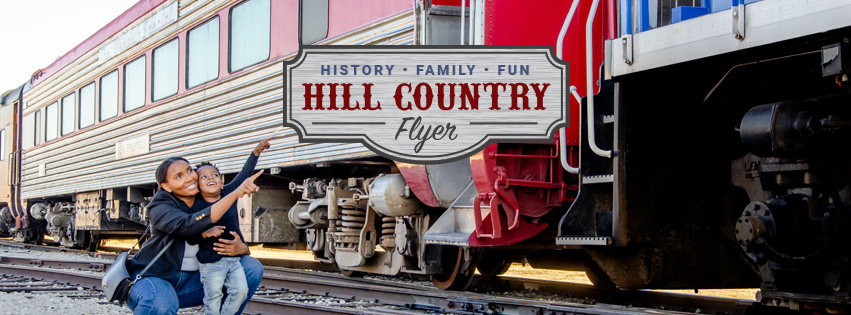
Train Main Image

Motive Power

Alco Diesel 442 / Southern Pacific 786

Alco Diesel 442 

When the Austin Steam Train Association found itself without a serviceable 786 in July of 1999 we were forced to use diesel-electric locomotives to continue uninterrupted service. At first, borrowed engines from the local freight carrier sufficed, but a decision was made in 2000 to purchase our own diesel. That process culminated in the acquisition of engine 442.

Built by the same company that built 786 in 1916, the American Locomotive Company constructed a series of these six-axle RSD-15 road-switchers in 1960 for the Atchison, Topeka & Santa Fe Railway. Our 442 was built as Santa Fe 842, and was later renumbered 9842. The RSD-15s saw service in all parts of the Santa Fe system, and were gradually retired in the '70s as the Santa Fe modernized its motive power fleet.

The 9842 was purchased secondhand by the Squaw Creek Coal Company of Indiana and was used to haul heavy coal trains. Our engine later wound up under the care of the Indiana Hi-Rail Corp., where it was again renumbered 442. We purchased the 442 from Indiana Hi-Rail in early 2000. ASTA staff and volunteers rebuilt the 442 for regular service and painted the engine in a modified Southern Pacific "Black Widow" paint scheme. The 2,400-horsepower locomotive is the last known operating example of its class.

The Alco RSD-15s are more commonly known to railroad enthusiasts as "alligators" in reference to the locomotives' long, low noses. So don't be surprised if you hear that your train is being pulled by a 'gator!

rule

Southern Pacific 786 

The 786 was completed by the American Locomotive Company's Brooks Works of Dunkirk, New York in August of 1916. The locomotive was one of the group of 20 Southern Pacific Mk-5 class 2-8-2 Mikados (numbers 775 to 794). 786 was placed in service on the Houston & Texas Central subsidiary of the SP in September of 1916.

The locomotive received several upgrades throughout its career, including:

  1. Original extended smokebox shortened in the 1920's
  2. Boiler pressure upgraded from 200 to 210 psi at Houston in 1930
  3. Installation of a feedwater heater and superheaters at Houston in 1941

786 was retired from service and donated to the City of Austin in March of 1956. It was placed on display near the firehouse on Trinity between 4th and 5th streets. It would remain there for 34 years. In 1989 the 786 was leased to the newly-formed Austin Steam Train Association and was removed from display the following year. Restoration of the locomotive began in June of 1990 at the Westinghouse Motor Co. shops in Georgetown, Texas. A team of both professional and volunteer crews completed the intense restoration in a relatively brief amount of time. For three days in December 1991 the operational 786 and one coach car were at the center of a celebratory festival in downtown Austin. The first passenger excursion pulled by the restored 786 arrived in Burnet on July 25, 1992.

After seven years of reliable service, 786 was temporarily sidelined in July 1999 following the discovery of cracks in a key component of the locomotive. The cracks, which had apparently started decades ago and worked their way to the surface, will require replacement of the cylinder saddle casting -- a task which has not been undertaken in the United States in more than 50 years. Read more about the restoration at "Where is the Steam Locomotive", Restoration Update or look at the work in progress at the Photo Gallery.

SP 786 technical specifications, present day

Engine
Wheel arrangement: 2-8-2, Mikado
Drivers: 63 inches diameter (the tire at the rails)
Cylinders: 26 inch bore, 28 inch stroke
Loaded weight of engine: 285,980 lbs. (143 tons)
Loaded weight on drivers: 213,380 lbs. (107 tons)
Operating steam pressure: 200 psi
Computed tractive effort: 53,360 lbs.
Overall length: 80 ft. 2 1/16 inches (engine and tender combined)
Overall height: 15 ft. 10 3/8 inches (over the stack)
Width over cylinders: 10 ft. 8 3/8 inches
Wheel base:
    Drivers 16 ft. 6 in.
    Engine 35 ft. 2 in.
    Engine and tender 73 ft. 7 7/8 in.
Wheel diameters:
     Pilot 30 in.
    Drivers 63 in.
    Trailing 45 in.
Feedwater heater: Worthington 'S' or 'SA' type Whistle: Nathan 6-chime, brass
Boiler design: Straight top, sloping backhead
Heating surfaces:
     Tubes 3,974 sq. ft.
    Superheater 865 sq. ft.
    Firebox 235 sq. ft.
Firebox: 120 5/8 in. x 84 in.
Boiler tubes: 275 each of 2 in. tubes plus 36 each of 5 3/8 in. tubes
Valve gear: Walschaert's with power reverse

Tender
Design: Vanderbilt type (horizontal cylindrical water tank)
Water capacity: 9,000 gallons
Oil capacity: 2,940 gallons
Length: 33 ft. 91/2 in.
Overall width: 10 ft. 2 1/2 in.
Empty weight: 57,600 lbs.
Loaded weight: 156,100 lbs.

Calendar Application


         Hill Country Flyer
         Bertram Flyer
         Special Ride
         Multiple Rides

Special Events

    Bertram Oatmeal Flyer

    Murder Most Foul

    Halloween Whodunit on the Bertram Flye

    Main Street Bethlehem

         Official Site - First Baptist Church

    North Pole Flyer

Recent News

    Historic Narrow Gauge Still Up and Running


    Bertram Depot Open for Summer Tours

    Steam Engine Restoration Update


Favorite Links

    Cedar Park Chamber of Commerce

    Cedar Park Attractions

    Burnet County Tourism

    Burnet Chamber of Commerce

    Fun Things To Do in the Hill Country

    Cedar Park Hotels

cedar park fun